Int. Bon. Soc. Zwei
The second day was like the first with its schedule. Two long sessions in the morning with a coffee break followed by lunch. And then three shorter sessions with a coffee break followed by dinner. It made for full days with dinner not finishing until after 7:00 if you were enjoying your dinner conversation.
The meals and the coffee breaks played the wonderful role of having the opportunity to talk and build relationships as they weren’t abbreviated. Coffee breaks were half-an-hour and lunch was an hour-and-forty-five minutes. Coming right after the sessions they also provided further discussion time. And for those deep into the academic world it provided rare face-to-face time with important colleagues. But it was most important as a time to relate, meet new people from around the world and to continue friendships that, for some, stretch over the 40 years ago of these Kongresses.
But as someone new to Kongress it can be a bit intimidating. Initially I am more reserved in such social times considering I don’t hold a position anywhere, I haven’t been published (mostly true) and I hold no degree beyond a lowly Masters. And these factors are the currency of introductions. Thus my narrative in response to the introductory queries could be quite short in comparison to others. So I went with the shorten-it-even-further tack to dislodge the routine conversation. As in: The Other, “And what do you?”; Me, “Nothing.” I’ve found it not only dislodges routine conversation but also sifts through people quicker in finding those whose interests are more than whether I may be of use to them. Pleasantly there were a lot less of those folks at the gathering than others I’ve attended. While networking is not always a bad thing for further work together the common interest in the other for who they are was the common currency of interactions at this gathering. That idea as being a core part of Bonhoeffer’s theology probably created this currency. All of this is to say is that coffee and meals were more enjoyable than they could’ve been. But if I just said that you’d be done with the pictures by now.
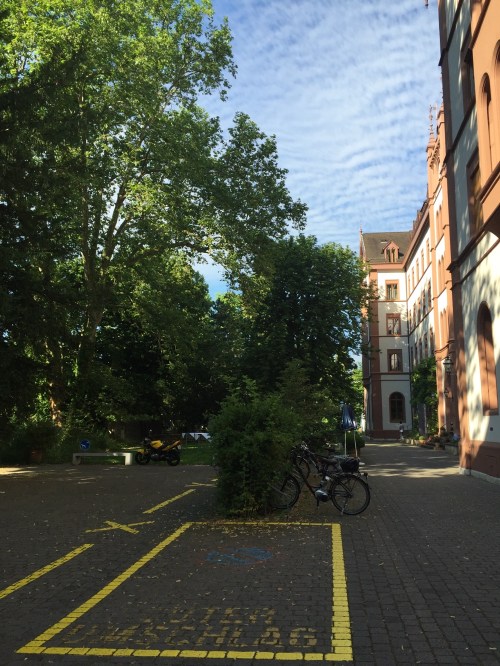
The only picture I have of the courtyard with gathering area hidden behind the bike and shrubs. There was also a beautifully large garden at the far end.
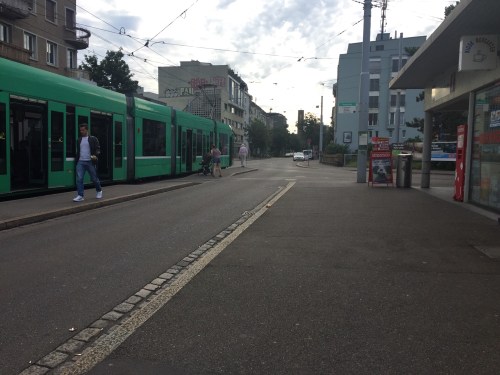
The beginning of the 10-minute walk from my Airbnb.
Friday evening I caught a tour to the Basel Munster, the iconic church of the city to see an Erasmus exihibit. This year is the 500th anniversary of first published Greek New Testament, translated at the hand of Erasmus. This was significant because until that publication there was no complete collection of the Greek New Testament (the language in which it was written) and it certainly wasn’t available to anyone for study unless you traveled to the various locations where different recovered Greek manuscripts were kept. What was available was the Latin translation of the New Testament. This was used in the Mass but was insufficient for good translation into other languages. So Erasmus’ publication enabled a new wave of translations into other languages and thus unintentionally contributed to the efforts of the reformation movement.
At Basel Munster were some of the original texts from that process. It also is Erasmus’ final resting spot. His headstone sits off of the main sanctuary of the church.
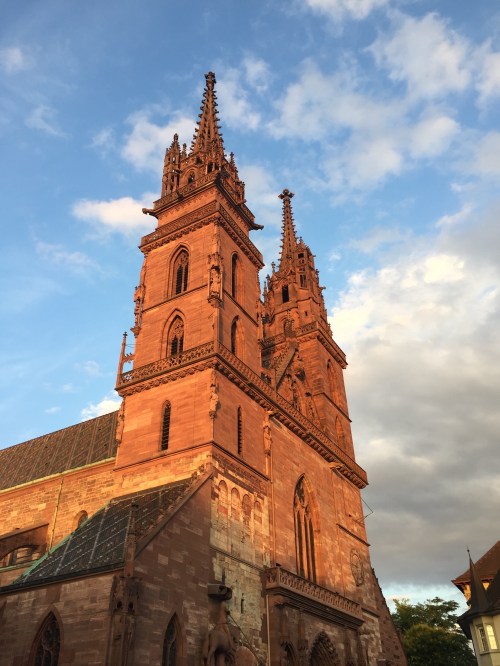
Basel Munster
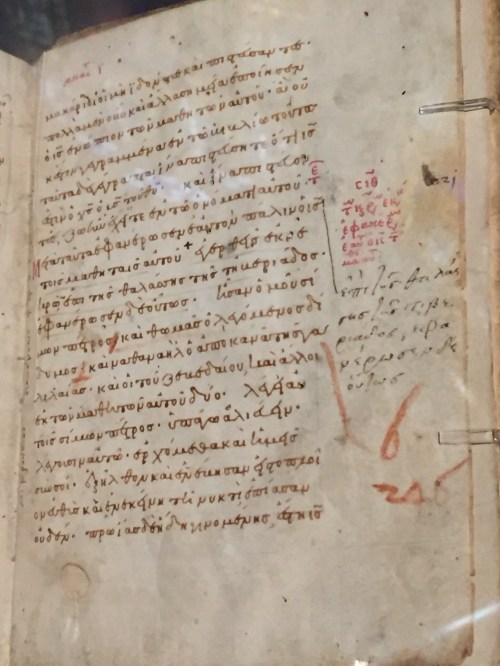
Original annotations of Eramus’. His handwriting is in black on the side under the red.
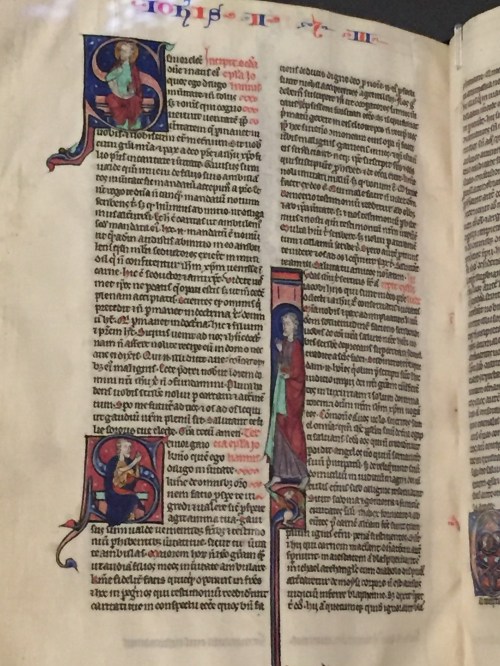
Beautiful art within a Latin text.
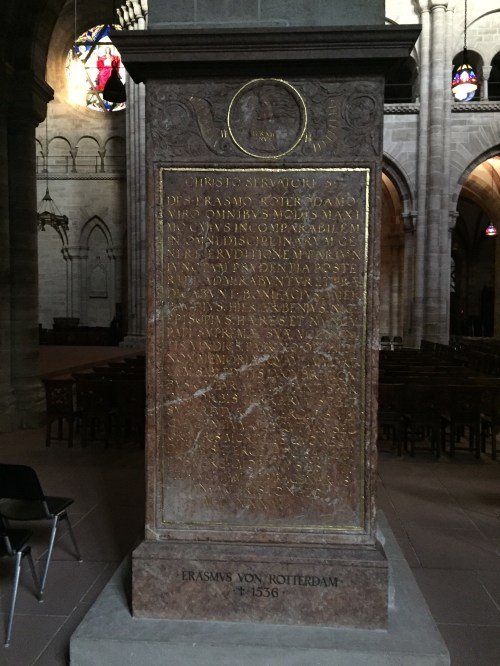
Erasmus’ headstone.
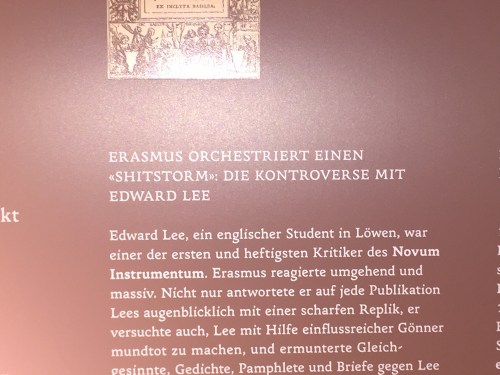
“Erasmus orchestrates a Shitstorm” is the headline from 500 years ago. He orchestrated an even bigger shitstorm with his published arguments with Martin Luther in the 1520’s concerning the Bondage of the Will. This was a seminal argument in the Reformation. Luther won the argument but lost the war as is evidenced in our theology today. I recommend any investigation into that argument amongst giants.


 Apocalypse Then